Bringing Sourdough Back to Life
16 December 2025

Bread Baked Today, Ready for Christmas Tomorrow
If you’re picking up bread on Christmas Eve but not sitting down to eat it until the next day, a quick refresh will make all the difference.
We bake overnight so everything is as fresh as possible — which means many Christmas orders are baked that same day, then enjoyed hours (or even a full day) later. The good news? Proper sourdough is made for this. With a hot oven and a few simple techniques, you can bring loaves and pastries back to life so they taste just as good on Christmas Day as they did when they left the bakery.
Here’s how we do it — plus a few waste-less ways to make every loaf go further over the holidays.
Refreshing Bread for the Big Day
If your bread was baked the day before and stored well, this is all it needs.
SOURDOUGH LOAVES
Place the whole loaf directly into a hot oven at 240–250°C for 6–12 minutes, with the door slightly ajar.
The crust will crisp up, the inside will soften, and the loaf will be ready to slice and share.
PASTRIES
Heat at 200°C for 3–7 minutes, again with the door slightly ajar.
Watch closely — you’re warming and re-crisping, not re-baking.
EVERYTHING ELSE
Keep stored in an airtight container until you’re ready to serve.
Simple, quick, and well worth the few minutes of oven time.
If the Sourdough’s a Little Older
Sourdough doesn’t really go stale the way supermarket bread does — it dries out instead. And that’s good news.
If a loaf is feeling hard or dry, lightly wet the outside (a quick run under the tap or damp hands is enough), then bake at 200–220°C for 10–15 minutes.
The moisture rehydrates the crust while the heat revives the crumb. It’s an old baker’s trick, and it only works because sourdough is made with time, fermentation, and structure — not additives.
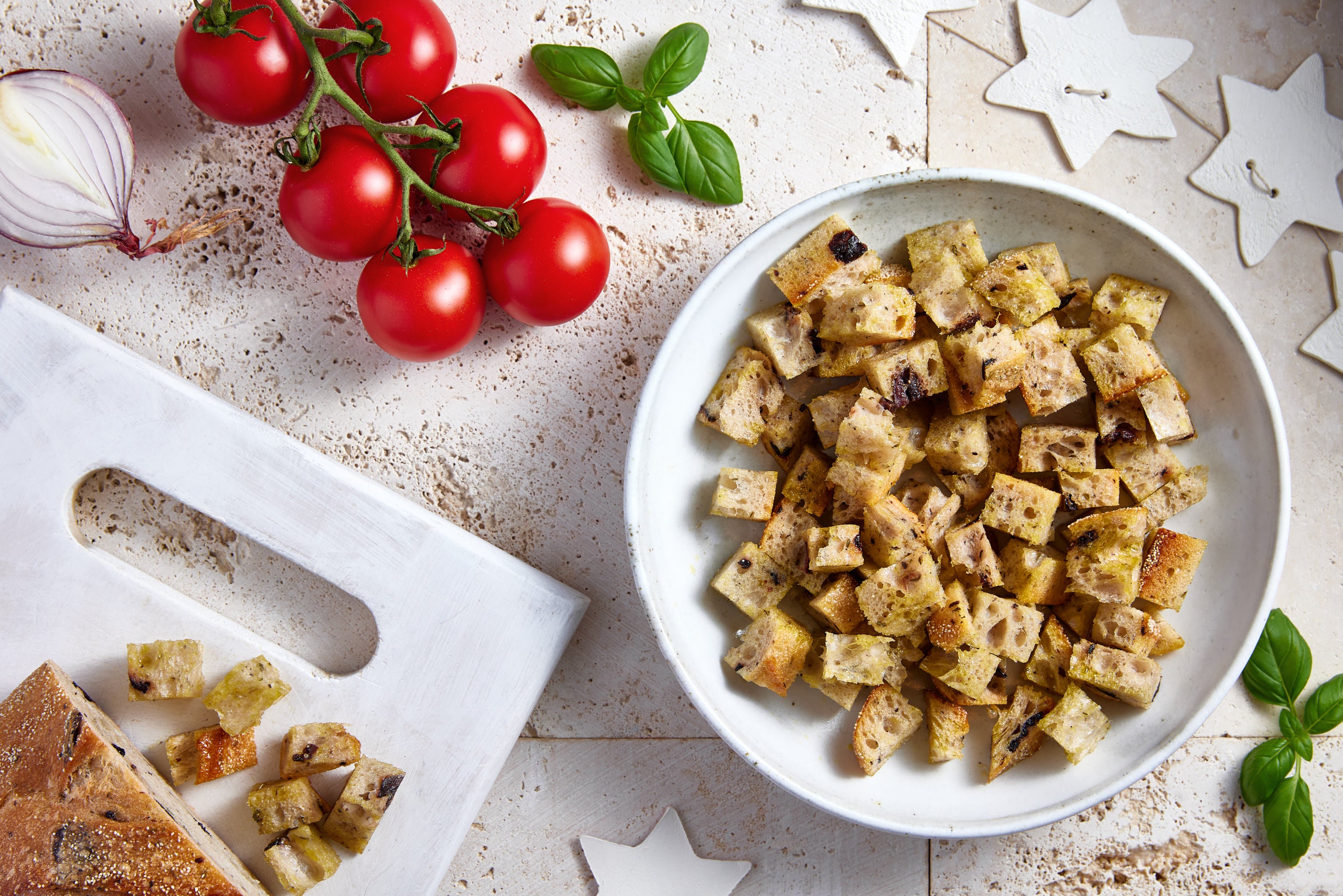
When Bread Becomes Part of the Meal
Sometimes refreshing isn’t the answer — and that’s where older bread really shines.
Firm sourdough is ideal for cooking, soaking up flavour while holding its shape. A few tried-and-true ways we use it at home:
- Panzanella Salad — perfect for summer tables
- Loaded Garlic Bread — generous, messy, and very popular
- Roast Tomato Bruschetta — simple ingredients, big payoff
- Chicken Stuffing Bake — ideal for Christmas leftovers
- Bread & Butter Pudding — comfort food at its best
- Smashed Broad Beans & Peas on Crostini
- Ciabatta Crostini — make once, use all week
And when bread is truly past saving as slices, dry it out completely and turn it into breadcrumbs. They’ll keep for months and make everything from schnitzel to stuffing taste better.
Waste-Less, by Nature
This is one of the things we love most about sourdough. When bread is made properly, it gives you options.
It doesn’t demand perfect timing or perfect storage. It can be refreshed, revived, repurposed — or turned into something new altogether. In a cost-of-living crunch, that matters. Making food go further matters.
So whether you’re feeding a full table on Christmas Day or stretching leftovers into the days that follow, good bread works with you — not against you.
That’s the quiet strength of sourdough.